Home Blog Page 7

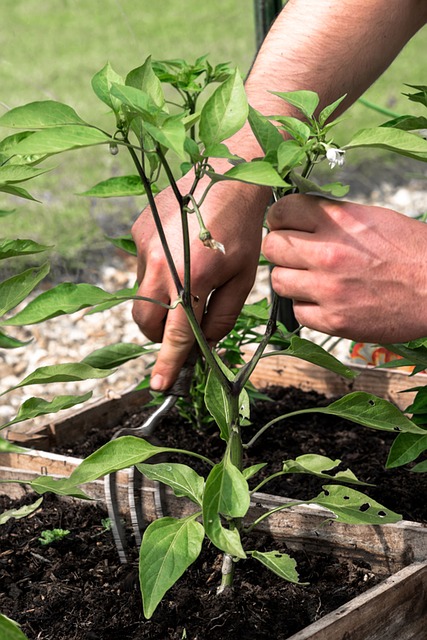
How And When to Plant Chili

0

Chili peppers have many varieties, colors and flavors that help us make delicious recipes and have many health benefits. With sweet peppers you can prepare exquisite stews and divine stews, sauces to put on roasts and pasta.
How And When To Plant Chili

On the other hand, chili peppers are native to America and, above all, to Central America. In Spain there are already several Mexicans who have taken the initiative to plant chili peppers and more than all the famous hot chili peppers or jalapeños widely used in Mexican recipes.

Only that you have to know certain characteristics of this wonderful plant in order to have a good harvest and know all the little secrets that we are going to discuss in this article. If you like chili peppers, sweet or spicy, then you came to the right place to develop this skill that will give you a lot of satisfaction.

In Madrid and Catalonia there are many Mexican food restaurants, which not only delight Mexican residents; but also, to the Spaniards, who love the flavor of hot chili peppers. A delicious dish is the chicken with garlic, it is one of the most requested; Also, the stuffed fish, which is baked stuffed with a sauce made from sweet peppers and a little touch of spicy pepper.

Without forgetting the famous Mexican tacos stuffed with meat and a lot of minced jalapeños, which gives them that special touch of spiciness. It is important to highlight the benefits offered by the spicy oil that comes from hot peppers. It helps a lot in people building up antibodies to allergies in the airways, eyes, and nostrils. They also greatly improve blood circulation through the arteries.

Spicy is also a powerful aphrodisiac, renewing the strength of those who are a bit down and bringing much happiness to couples who consume it regularly. The hot sauce has already become a very delicious tradition in many countries of the world and that accompanies many recipes.

For this reason, we will teach you in a simple and quick way how and when to plant chili peppers, since planting time is of the utmost importance so that you can be successful in your harvest and since it is a medium-sized plant, in any small space you have in your house and with the required temperature and certain tricks. You can enjoy this plant and get a good number of peppers for your recipes.

It is also important that you know how to make a good compost, so that your plant grows strong and robust and your peppers come out fresh and shiny, this is also very simple but it has its technique that you must know exactly. Also, the ideal temperatures and the amount of sun that the plant should receive.

Another important thing that must be mentioned is that if you plant chili peppers at home, they will be free of chemical products and fertilizers that are added in large plantations and that in the long run affect our health.

So, if you have some plants in your house and you raise them naturally, this will be of great benefit to your health. You can also produce your own seeds so that when the plants die, you can sow again and maintain production at home. And if things are going well for you and you have a large yard, why not, you can have a medium production and sell chili peppers to the market and restaurants.

Many big businessmen started in this way and today they sell and export the best chili peppers; both sweet and spicy and made in Spain. With all the difficulties due to climate changes, but of proven excellent quality.

For this reason, we encourage you to discover all our tips and get down to work and plant chili peppers anywhere in your home or wherever you are. One of the most important things is the germination process; which resembles when a baby begins to form in the womb of a mother. And that from that miracle onwards we have to give a lot of love and special care to the plant.

Instructions for and when to plant chili

We will start by explaining the procedure how to plant chili peppers:

  1. The first thing is to have the seeds. You can buy them in the market already dry, but we recommend that you go to the market and buy some chili peppers, that is, the biggest and most beautiful ones that you can select.
  2. Then with a knife, cut them in half and carefully remove the seeds.
  3. After you have all the seeds out, place them in a dry, uncovered glass jar, store the seeds in a warm place for at least 3 days to dry. Remember that the seeds have to die before being born.
  4. When the seeds are dry, place them in medium plastic cups, it can be disposable, with just half a centimeter
  5. With a hot nail, make several holes in the cups at the bottom so that excess water comes out.
  6. After the seed is buried half a centimeter, add water but not much, just to moisten the soil.
  7. This water cannot be directly from the one that comes out of the pipe since it has a lot of chlorine and can kill the seed.
  8. You have to have a bucket of water that is sitting for at least a week after taking it from the pipe.
  9. Or it may also be that you collect water in a container when it rains and have it stored for the moment the seeds germinate.
  10. When you finish this, do not place the glasses in direct sunlight, because it would burn the templates.
  11. Place the vases near a window or in a covered place that gets the sun rays but not directly on the plant.
  12. This takes more or less 4 weeks to germinate, when the template is two or three inches in size and has more than 4 leaves, then you can transplant it into a larger pot and be very careful not to mistreat the roots.
  13. After the plant is more or less 30 centimeters large, then you will place it so that it directly receives the morning sun and indirectly receives the afternoon sun. For this you must know the geographical position of your house and where the sun rises and sets.
  14. Done! Always be aware of keeping the pot where you planted moist and with water without chlorine. With your care and your love, you will have a super chili pepper plant.

When to plant peppers:

  • The peppers are from the hot land, and they need a temperature of 25° to 30° degrees Celsius.
  • Therefore, it cannot be sown in winter, unless you build a small greenhouse with some lamps that maintain this temperature day and night.
  • You can do this with a fine white cloth that allows the sun’s rays to enter a little, an environmental thermometer and some incandescent light bulbs.
  • But if you don’t want to complicate a lot of planting in autumn and summer. After the plant is bigger, it adapts to the changes in temperature of the environment.

What do you need for and when to plant Ají?

  • Small or medium disposable cups.
  • Chili pepper seeds.
  • Earth or vegetal layer.
  • A small space at home.
  • Pots.
  • Much encouragement and perseverance.

Tips for and when to plant chili

  1. In order for your seeds to germinate quickly and your plant to grow beautifully, it must have a good fertilizer or compost.
  2. You can do it at home with vegetable waste, banana shells, egg shells, dregs or coffee waste.
  3. You take the banana shells and the vegetable shells and chop them as small as you can and you can grind the peels, putting it in a plastic bag and crushing it with your hands.
  4. Then, you mix it with sand or topsoil and leave it for 2 months in the sun and add water every day to moisten the soil. Thus, you will have a land ready for your plants and much success.
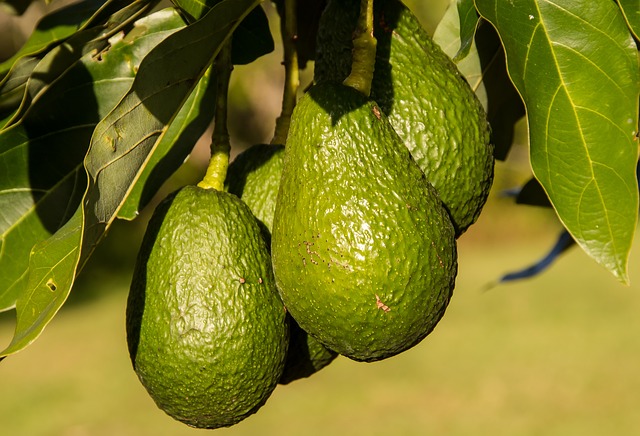
How And When to Plant Avocado

0

The avocado is a fruit native to Central America, but in Spain it is already being harvested in large quantities. Its taste is delicious and many of us have tasted it when we eat tacos with guacamole. This Mexican dish has traveled all over the world with its flavor, bringing many Spaniards captive by that traditional recipe.

How And When To Plant Avocado

Avocados besides being very tasty have special characteristics since they are rich in vitamins A, D, C. Also, they contain a large amount of natural fatty acids, which help lower bad cholesterol and improve blood circulation.

In this article we explain how to plant an avocado

In the same way, they have a great use in the cosmetic market, since if you put a little avocado in the hair and leave it for several minutes. This rehabilitates and strengthens the hair and scalp in a surprising and natural way. Also, for people who have very dry complexion and skin, avocado masks are placed for several hours and their skin improves impressively.

It should be noted that the salads that are made with chopped avocado in squares, are exquisite and very nutritional, since you will be directly ingesting all its vitamins and fatty acids.

To harvest them at home is very simple, you just have to go to the market and choose the largest and most beautiful avocados you get; The seed is carefully extracted. Later we will give you several secrets, so you have a tree full of avocados and enjoy all its benefits.

The avocado shells can be chopped as small as you can and mixed with sand or vegetal layer to have a good compost or fertilizer. You can also add the waste of vegetables, which are used daily and cambur shells and finely chopped bananas. Of course, this has to last, 3 to 5 months mixed with sand so that it becomes organic matter and is a lot of vitamins for the growth of the avocado tree.

Avocado reproduction is not very easy, but it is not impossible either; You just have to be at the time of year that is not very cold and all the environmental conditions that this plant needs. You can have a large and leafy tree in the yard of your house, which will give you its fruits and plenty of shade that helps keep the environment cool.

Also, you can grow it in large pots if you do not have much space, the tree will grow and bear fruit. But in a slightly narrower place if it were your case, although if you have eaten avocado and you like it a lot, you will surely like to have this tree and give it the best care.

In many parts of the world, they also use it when they go for a walk to the beach, they make it puree, with a fork. And they spread it all over the body, it is one of the most effective sunscreens and special for young children who are delicate-skinned, so if you put chemical sunscreens. They can cause serious allergies and skin diseases, so that later you will spend more on medications than the chemical sunscreen cost you.

Therefore, the best is natural, and avocado offers us many uses and home remedies that no industrialized medicine offers you. Having and harvesting avocados will allow you to save many euros, making many natural products with it, and why not, you can also sell these products and start a small family business.

It should be noted that if you have not been able to have children, avocado helps the production of sperm in men and also naturally cleans the ovaries of women. So, if you have not yet been able to have children, start consuming avocados in salads and also as guacamole that can be added to grills and tortillas.

If you are cardiac and have problems with tension and heart, avocado will help you in a great way to stabilize your cholesterol and return the vitality that your circulatory system needs, so encourage yourself to plant and harvest avocados at home and in any nearby land.

Instructions for and when to plant Avocado

  1. The first step is to get the avocado seed, which you can locate in the supermarket, buying the largest and brightest avocado you get.

This article on how to graft an avocado can be useful.

  • After you have the largest avocado, carefully remove the shell and then the flesh of the avocado, without mistreating the seed.
  • When you have the seed in your hand, wash it with water to remove the remains of avocado meat.
  • After the seed is well cleaned, you will visualize it and you will observe that it has a thinner part and a wider part, similar to a chicken egg.
  • The thinnest part is the upper part where the stem of the plant will be born.
  • The other part is the thickest part where the roots will grow, which is where they will absorb all the nutrients necessary for the growth of the stem of the plant.
  • Take an empty plastic soda bottle and cut it in half; Then the part where the lid goes, you are also going to make a cut so that you make a pedestal or base to the avocado seed.
  • The part of the bottle that you cut, which was like a glass, bone the part of the base of the bottle, you are going to place the seed with its pedestal and with the thin part of the seed towards the top.
  • Then, you drink water and add it to the container with the seed inside, but that the water level only covers half of the avocado seed, and that there is enough water left for its germination.
  • Subsequently, place your transparent soda container with the avocado seed in a warm place, but that the rays of the sun do not stick directly, it can be near a window.
  • When the rays of the sun begin to give the seed, but very gently, then you will begin to see how at 4 weeks the roots of the seed begin to come out and at 6 weeks the stem will begin to grow.
  • More or less when it is about 9 weeks old the stem will have a few leaves and the roots will be more or less 6 centimeters.
  • When the plant has these characteristics, you must have a pot with compost or organic fertilizer and wet soil ready to place your plant.
  • You cannot bury the seed much, only that the stem remains with a little seed poking out at the top.
  • And all the roots that extend to the bottom of the pot, eye you must be very careful when you are placing the root in the pot not to break or damage the seed. And the sand must be very loose.
  • The pot has to be more or less 50 centimeters deep and with a diameter of 30 centimeters, it also has to have some holes, at the bottom so that the excess water comes out.
  • Also, you can plant it in the ground, but remember to be very careful with the roots and that you cannot bury the plant much.
  • The rest is to give it a lot of love and attention so that it grows healthy and beautiful giving the best avocados in Spain.

What do you need for and when to plant Avocado?

  • An avocado seed.
  • Earth and sand with fertilizer.
  • Transparent plastic soda bottle.
  • Scissors.
  • Water.
  • Be very careful.
  • Pots for planting plants

Tips for and when to plant Avocado

  1. The sand where the seed is going to be sown should be kept moist all day, not wet, because excess water will rot your roots and the plant dies.
  2. When you have the plant planted in the pot, the first months do not let it give you direct sunlight, because it will burn the leaves and dry the plant.

How And When to Plant an Olive Tree

0

The olive tree is one of the oldest in the world and most used for the consumption of its olive and for the production of olive oil.

How And When To Plant An Olive Tree

In Spain 30% of the world’s olive oil production is produced and it is a tree that can be produced in many parts of the world and in different types of land, the only thing that affects it a little are the low winter temperatures but otherwise its cultivation and harvest are very simple.

If you want to have this wonderful fruit at home, you can do it with the different techniques and tips that we will be suggesting later so that you can have this benefit at home and available.

It should be noted that olive oil has large amounts of vitamin E and A, being one of the most recommended by doctors. When people have high cholesterol problems. Its consumption in salads and in different recipes plays a fundamental role in our body, being practically necessary its consumption.

This oil helps lower bad cholesterol, which circulates through the blood and our veins. It should be noted that it is also widely used in the cosmetic industry to make sunscreens for the skin, which are very expensive. That is why if we learn to sow and cultivate the olive tree, we will be saving a good amount of euros that we can later invest in other things.

Its olives are at first green and then when ripened they are transformed into a bluish black color. It can be sown by seeds or it can be sown by cuttings. At present the most used technique is by cuttings that are taken from the largest and leafiest tree in the olive groves, to take the best gene and develop production to the maximum.

This tree and its branches symbolize peace, the hallmark of the UN. It has branches that symbolize peace. On the other hand, in the Bible the Lord Jesus, I take it as an example when the spoke of the two types of olive trees, the normal and the grafted referring to his chosen people. Since at this time in Israel a lot of olive oil was produced and they had large fields of olive trees.

Currently in Spain, olive olives are also widely marketed, to flavor different recipes and give a unique flavor to meals. Whether green or ripe, its flavor is special and can never be missing in the stews of your best dishes.

So, if you have eaten and tasted olives and you really like their flavor this article is perfect for you to start planting this tree in your house or in any land that is nearby. So that you have this benefit without fertilizers and without industrial chemicals, which are always obtained and added in the large olive groves.

The olive tree, like any plant needs a good fertilizer or fumes, so that its fruits are large and good. Also, of certain care and recommendations for its harvest. On the other hand, olive trees have a wide variety of plants and fruits that adapt to different climates. But in our house, we can make a small garden or simply plant it in large pots and have them at home in any corner, that does give it a little sun.

The important thing is that you encourage yourself and follow our recommendations so you can enjoy giving life to this important tree. And you can, why not, share this information with your friends and family. You will surely enjoy it very much and learn to have an olive tree planted at home.

In another order of ideas, if you ever have an accident and suffer a first or third degree burn, if you put a little olive oil with a cotton wool and very carefully, the pain will be relieved and your burn will heal much faster than normal, this remedy was used since ancient times and also to heal wounds of deep cuts.

Below we will give you the best advice, so you can plant your olive tree and its best time of year to do so.

Instructions for and when to plant an olive tree

  1. The first thing is that you get some stakes or some branches of an olive tree, we recommend that you take the stakes of the largest and leafiest tree in the olive grove.
  2. Take a piece of land or soil and start digging a hole not very deep.
  3. In that hole you are going to add, banana shells, vegetable waste, and fruit waste. You can also add the coffee grounds and egg shells.
  4. This has to be done at least 8 months before, planting the olive cuttings so that it is a soil with many nutrients and your tree grows very strong and fast.
  5. After this place the stakes with a separation of 1 square meter.
  6. We recommend that you put drip irrigation, so that the soil stays moist.
  7. You are going to bury the stake 5 centimeters under the sand and 20 centimeters outside so that it begins to sprout its roots that will usually be about 3 months.
  8. After 15 months it will begin to bear fruit and at 18, months you will be harvesting the green olives. But if it is your taste or preference, you can leave them 2 more months to mature and become blacker and darker.

What do you need for and when to plant an olive tree?

  • Fruit and vegetable waste.
  • Banana shells.
  • Eggshell.
  • A shovel.
  • Stakes of an olive tree.
  • Drip irrigation system.

Tips for and when to plant an olive tree

  1. Olive trees are very sensitive to low temperatures and especially in the first months where the roots begin to grow, therefore, we recommend that you place a thermometer. To control cold levels, at different times of the night, which is when the temperature drops the most.
  2. If the temperatures are very low you should place an incandescent lamp and regulate the night temperatures so that they remain at about 25 degrees Celsius, you can also use flowering lamps, but with their environmental thermostats to turn on and off automatically.
  3. It should be noted that the best time to plant olive cuttings is in early summer.
  4. You can also buy in the market organic fertilizer or worms that is very good for this type of crop and that already comes ready to use.
  5. The drip irrigation system can be done with a large water tank and a couple of meters of hoses.
  6. It is recommended that the water tank to irrigate, you add a few drops of anti-chlorine. Since the water that comes through the network has large amounts of chlorine. Or try taking the water that falls from the rain to fill this tank, as rainwater is best.
  7. You cannot water with a lot of water, because if this happens the roots can be damaged and the olive tree will not grow.
  8. On the other hand, this tree can also be planted in large pots and placed indoors, but in a place where sunlight hits, which is one of its main sources of life.
  9. In the pot you have to place a mixture of organic fertilizer and the other half of sand, clear very well mixed so that the plant has everything it needs to grow and develop.
  10. Remember that the pot has to have small holes at the bottom so that the water that is in excess goes down product of the force of gravity.

How And When to Graft Grass

0

When you have the garden with grass and suddenly it starts to dry or breaks down or, you do not have grass, but you want some areas of them to have grass, you have to consider the possibility of grafting grass. It is not as complicated as it seems and you will have again the land, garden or area where you want to graft it, beautiful and green.

How And When To Graft Grass

It must be made clear that, in order to make grass grafts, it must be of a very specific type. It is perhaps not the finest lawn, in fact, it is called Gramon and it is for which grafts can be made. Let’s try to comment on how it can be grafted, in what way and what type of grass it is.

Keep in mind the following: if you want a very nice lawn and fine grass or, on the contrary, a green grass that is very resistant but to the touch, is not entirely pleasant and pulls to be coarse. You must take that into account.

For example, when placing it in passage areas where you will be walking, stepping, playing, parking the car, if there are children, animals, etc. Sometimes, you have to be more practical and think if it compensates a little more the one that is more durable and holds better, although in the touch and closely, it is not the most comfortable or beautiful.

It is not complicated to reimplant or perform for the first time the planting/sowing of the grass grafts. Of course, you have to perform many steps and they are important. Do not ignore them to save or to go in a hurry. Then it will be more expensive. And you have to take into account both the time it takes to grow (several months), it must be a warm climate so that it does not spoil and grow well and the right season for planting.

And of course, go thinking about buying a lawn mower if you do not have it because you must have it yes or yes. You have to cut the grass and you cannot do without it. There are already in the market quite cheap, for forty euros, you can buy one. Simple, but it will fulfill your mission, which is simply to trim the grass.

Instructions for and when to graft grass

  1. Buy the so-called “tapes” that can be either the so-called Gramón or the other variety “Bermuda”.
  2. If you decide on Bermuda, you must take them out of the tapes, cut them yourself.
  3. If instead you opt for the Gramón, go taking areas where you see that the length is acceptable, go pulling what is called the stolons.
  4. You will need to take approximately enough pieces to replace it well. Calculate to take a wheelbarrow or a couple or three, of bags.
  5. You must measure the garden before. Measure the area you want to have with grass.
  6. Once you have calculated it, you must take into account the measurements of the tepes.
  7. For example, we can tell you that a tepe usually measures 1m2. From this single tepe, you can take out for cuttings for a space of 20m2. Once you know this, do the math for your land according to the space you need to cover.
  8. To plant the Gramón the most suitable time so that it does not spoil and grows without problems, is between spring, summer and early autumn.
  9. They need a warm climate. In this way it expands better, grows well and the roots (which are the grafts of the lawn) are linked.

What do you need for and when to graft grass?

  • You will need to bite the area where you are going to reimplant. Do it as if you started with the planting or had to place curtains.
  • If you have uneven terrain or there are holes, you must fill them in and level them.
  • Preferably use topsoil.
  • Remember that you must have an automatic irrigation to be able to water it later. Always think that you will appreciate and much, that you place the programmable automatic risk. It will be faster, you can add the hours you want and you will forget to be watering daily.
  • A shovel.
  • A pickaxe or chapo to level the area by removing stones or weeds.
  • Topsoil for planting cuttings.
  • Very important fertilizers.
  • Always remove weeds, always. Don’t leave any. Tear them up and give them an herbicide.
  • Add a mineral-based fertilizer with complex fertilizer. It already incorporates potassium, nitrogen and phosphorus.
  • Cut pieces of stolon. You will have to take into account the knots that you have that you can cut it as you see fit. It can be two, four, six…
  • Put the cutting in half, buried, but when you place it is not completely straight. It should be introduced lying down (bent).
  • The other must be placed nearby, but with an approximate separation of about fifteen and maximum forty centimeters.

Tips for and when to graft grass

It doesn’t grow fast… Think that, to start seeing some visible results, it can take between three months and maybe four. In that time, they will take root and expand.

There are many people who, in these cases, who do not want to wait between two months and even four, to see the land with pieces of grass or without it, is to make a small trap or trick. When they graft the lawn, they also throw seeds from a particular lawn. This trick is used by many gardeners.

What does this achieve? That while in these months the roots are growing, the seeds do it before and leave the ground and that area at first sight, green. But afterwards, there will be no problem, because the grass will “eat” what you planted and you should not worry.

Think about performing all the steps well when it comes to properly performing the lawn grafts, you will appreciate it later.

As for irrigation, if you already had it, you should not add anything else. But in the event that you did not have it before, you must place the famous thicknesses. You will need to water the lawn. Obviously, it is not essential, you can give a gift with the hose if the budget does not reach more, but it is, much more comfortable and you will end up thanking it. The same goes for automatic irrigation. If you can afford to make it programmable, you’ll end up thanking it later. It is much more comfortable to be able to program the hours you want the lawn to be watered, alone (without having to give it your or even worse if you do it with the hose), calculate the exact time you want it to be watered … Think about it when installing it because although it is true, they are not economical, over time they have dropped a lot in price and now you can find many interesting offers.

And something that you should have if or if and that you will have to buy, a lawnmower. It does not matter if you buy it very expensive, good brand, simpler, economical, gasoline, four wheels to go sitting or hand and making force in the arms, etc. Be that as it may, it matters little, except in pijadas, speed and others, but everyone mows the same lawn. You will have to get hold of it, so think about it as soon as you have done the planting, because when it grows, you will have to cut it often if you want to keep it beautiful and not spoil or look like a jungle.

Grafting – Types of Grafts

0

Do you like gardening? This is a very entertaining hobby, which not only helps to invest free time well, but also acts as a therapy to release the common stress of everyday life.

Grafting – Types Of Grafts

Of course, as expected, having a garden requires a lot of care. It’s not just about sowing, watering and ready. In addition to that, you have to prepare the land, remove dead elements, such as leaves, flowers and dry branches. It should also be fertilized from time to time and monitor the plants to avoid the arrival of unwelcome invaders, such as pests, mold, etc.

However, all work and sacrifice is worth it when the plant blooms or when it bears fruit and it is time to harvest them. So, that becomes an incentive to continue planting and taking care of the garden.

However, for passionate gardeners, this is not enough. New challenges are set, in order to obtain unique results, which arouse the curiosity of all those who see them. This is possible thanks to graftsHave you heard of this technique? Probably yes! But surely the answer will be different if we ask if you know how to do them.

But, don’t let the parrot go away! After reading this short article, you will have all the necessary knowledge about grafts, so that you can do them yourself, if you wish. What advantages does it offer? Are there any negatives you should consider? What is its importance? Is there only one type of graft? What plants can be grafted?

If you want to know the answers to these and other questions, you’ve come to the right place. Therefore, you cannot stop reading this short article. This information will surely have a positive impact on the appearance and variety of your garden. Let’s see.

Instructions

When we talk about a graft, we refer to the operation that consists of joining two different types of plants, but that have a certain relationship with each other. This, in order to form a single plant that has characteristics of both.

While one of the plants will retain its root and its main characteristics, the other is inserted, by embedding a fragment of branch in the trunk of the first. This part will form branches and fruits equal to those of the mother plant, from where we obtained what is necessary for grafting.

For this procedure to be successful, the contact between both plants must be perfect. Thus, the callus, which is formed when the wound is closed, will be responsible for joining both plants and communicating their tissues, so that the sap can circulate, freely, from one plant to another.

Types of grafts

Although there are many types of grafts, we could include them in two broad categories. The first would be the barb grafts, where a piece of stem that carries several buds is grafted and the second, the bud, where a yolk is grafted on the pattern.

Within the barb grafts we find the following:

  • The English graft: which is done in stems that are thin, with e pattern and the barb of the same diameter. You must make a bevel cut in the pattern and in the pick. Then, on that same cut, another is made to both elements, in order to obtain some species of tongues. Both elements are assembled by means of the tabs, ensuring that there is total contact between the cambium of both plants. That is, the green layer visible when scraping the bark of a branch. This is vital for the graft to be successful. Finally, tie with special adhesive tape for grafts.
  • Approximation grafting: This type of grafting involves welding two branches of entire plants. For this, both plants must be close. Each branch is lowered by removing a few centimeters of bark. However, the parts you remove must be the same and with the same height, so that, when joined, they fit perfectly. Finally, tie them up and cover them. When the union has occurred, cut the plant that you do not want to form trunk and branches. We can also find the branch stump graft, the lateral stake, the single slit, double slit, bark, among others. In relation to yolk grafts, we can find the following:
  • Shield or T-grafting – this is most often used to produce fruit trees. It consists of grafting the buds of tree varieties on the patterns that have been obtained from seeds or cuttings.

The yolk is removed from the variety and then the bark is peeled off the other, with the knife, and inserted until the two horizontal cuts have been paired. Then, the graft is tied, allowing the yolk to peek out a little.

There are also patch grafts and splinter grafts. Whichever one you decide to use, the result will be the same. However, you must take into account some unique aspects. But what advantages does grafting a plant offer?

What You Need

The main disadvantage, or problem, of grafting, is incompatibility, since it negatively influences the genetic composition of plants. Some of its manifestations are:

  • The union of the yolk and the pattern does not occur.
  • Premature deaths occur.
  • There is poor development in the graft.
  • A strangulation occurs, which is known as a bottleneck, etc.

Therefore, in order to avoid these negative situations, which show that the graft has failed, you should take into consideration some recommendations.

Your advantages

  • It allows plants that do not produce seed and cannot reproduce by cuttings to be perpetuated.
  • A plantation is made in a short time, something that is very positive, especially for commercial purposes.
  • It makes possible the renewal of old trees.
  • It allows the reproduction of fruit trees with high productivity and quality of their fruits.

The plant produces much faster than those that have not been grafted, among many other advantages

Councils

In order for a graft to be done successfully, it is necessary to meet some fundamental conditions:

  • Affinity: In order for the cay to form, there must be affinity. Therefore, the flats must be of the same species or species that are related to each other, as is the case of orange and lemon. It is not possible to graft strawberry with banana, for example.
  • The cambium of the pattern and the graft must remain united. This is vital so that the welding can be done. Otherwise, the graft will not receive the sap of the pattern and will end up dying.
  • The appropriate season: this will depend on the climate, the species and the availability of the buds. In many cases, the graft must be done at the time of lactation of the buds. That is, before flowering, but after harvest. In the case of the tropics, grafts can be performed throughout the year, but the most suitable period is when the rains begin.
  • The graft should be protected after desiccation. Since the graft is a wound that must heal, it must be protected from water and the attack of pathogens that can cause different diseases.

Also, after the ignition, the grafts require certain care, such as desire, since the children tend to grow stronger than the grafts and generate competition. That is why they must be eliminated.

It is also necessary to take care of the graft from the attack of other animals, such as birds and those who live in the house, since they could cause serious damage, such as the breakage of the graft. However, if you take these tips into consideration, you can surely enjoy healthy and very productive grafts. A true miracle of nature.

Gardening Activities for Children

0

Many psychologists and experts in the field have determined that it is important to spend quality time with children. However, this does not mean that, if you only spend 15 minutes a day talking with them, it is enough and recommended.

Gardening Activities For Children

In reality, parents should strive to take time out of their busy work schedules to share with their children, since they have needs that must be met so that they can develop healthily and become productive and responsible adults.

The situation due to Covid-19 has led to the opportunity to share a greater amount of quality time, since almost all activities must be carried out from home, which includes entertainment.

If children do not entertain themselves in a healthy activity, they will be much more likely to develop anxiety attacks, hyperactivity, depression, insomnia and many other ills. Therefore, it is best to use your ingenuity and give them work to do, so that they stay busy in productive activities.

One of these activities is gardening. Several studies have shown that it reports great benefits for the physical and mental health of the person who practices it. In addition, it contributes to creating environmental awareness, takes care of the planet and promotes healthy coexistence with all animal species that are attracted to the garden.

Since gardening is full of different types of activities, you can assign your child a few of them and even offer to do them with him, in order to strengthen the emotional bonds between the two, improve communication and deal with problematic situations peacefully.

But what kind of gardening activities can children carry out? During this article you will know what they are and how you can put them into practice. Let’s see.

Instructions

Some of the gardening activities that children can practice are the following:

  1. Plant legumes in a glass jar. This is one of the most common activities at school. However, once the task has been completed and a grade has been received, it is normal to stop taking care of the seed that was planted. Now the goal is to continue taking care of it so that it can develop and become a plant.
  2. The activity consists of putting in a glass jar some cotton and some raw legumes, such as lentils, chickpeas or beans. Lugo, moisten the cotton a little and, after the passage of a few days, you can observe together how the legume has been germinating. As you may have noticed, it is easy, fast and very enjoyable for children.
  3. Decorate pots. Take a container that you have at home, no matter what the material, give the child other work tools and allow him to decorate it in the way that best suits him. Doing this will give free rein to your imagination.
  4. When it is ready, it will be time to use it to plant some aromatic plants inside it, such as basil, rosemary, chamomile or some vegetable seeds. Children should also be involved in this part of the activity.
  5. Make a drinking fountain for the birds. To do this activity together with the children, you just have to use several pots that are the same size and ceramic dishes, which usually come with them.
  6. Place the pot upside down and the other on it, using one of the plants as support. In such a way that it acquires the shape of a small fountain. Then, place another of the ceramic plates on top and fill it with water. Try to place it in a quiet place so that the birds can get to drink some water.

Other activities that children can do in the garden are pruning the plants, watering them, decorating, removing the branches and dry leavesmowing the lawnsweeping it with the rake, fertilizing the plants, collecting the ripe fruits, etc.

However, although most of the time these are very safe activities, it is always recommended that children carry them out under the supervision of their parents. Actually, the ideal is that they can do it together with them. Thus, both will end up enjoying a pleasant and very pleasant time. But what do you need to achieve it?

What You Need

  • The first thing you will need to do is take enough time to do these activities without haste and in a pleasant way. Gardening can help your child cultivate valuable qualities, such as patience, kindness and self-mastery. If you set an example for them, the lesson will be better recorded.
  • Make sure you have the necessary instruments. This includes, the use of protective elements, such as glasses, a pair of gloves and appropriate clothing and shoes, a hat to protect from the sun’s rays, etc.

They will also need pruning shears, hose to irrigate, enough plants and seeds, soil, water, fertilizer, vitamins for plants, a lawn mower, among other materials and specialized tools.

  • Since you will combine gardening with some crafts, you will also need clay pots to decorate, paint, brushes, glue, colored ribbons and other decorative elements, depending on the project they will carry out.
  • Finally, they will need an action plan. Each of the participants must know what task to perform and how it is recommended that they do it. In this way, they will finish on time and can enjoy contemplating their work by drinking together a refreshing lemonade with lots of ice.

Gardening can be a very rewarding activity for children. That’s why it’s worth a try. But what other benefits does it offer your children? Knowing them will encourage you to get down to work today.

Councils

Some of the main advantages of gardening, for the smallest of the house, are the following:

  • It helps them cultivate qualities such as patience, as children are forced to wait, however long it takes, to see how the seed they have planted develops and grows.
  • It encourages responsibility, because they learn to take care of another living being, instead of always having to take care of them.
  • It allows them to know what the field is like, how the flowers develop and grow, where the fruits and vegetables they eat come from, etc.
  • It instills in them respect for nature and the environment.
  • It encourages a healthier, more organic lifestyle for them.
  • Values such as perseverance, effort and dedication are strengthened.
  • They experience great satisfaction and sense of well-being in seeing the result of their hard work and the progress of the seeds and plants they have sown.
  • It allows them to have a fun time, away from television and video games.
  • It makes them kinder, because it merits that they treat the plants with respect and delicacy so that they can develop well and continue to grow.
  • They engage in the activity and feel useful.
  • It makes them feel closer to their parents, as they spend quality time with them, collaborating shoulder to shoulder in this activity.
  • It contributes to their mental and emotional well-being.
  • It makes them happier.
  • It helps them develop healthier and stronger, among other benefits.

For these, and for many more reasons, it is important that, from a very young age, you strive to carry out different gardening activities with your child. Many of them can be assigned taking into account aspects such as age, size, strength, motor skills, understanding, attention span, etc.

  • If you put these recommendations into practice, you will never regret it, as it will be an excellent way to spend quality time with your children, not only now, while the Covid-19 quarantine lasts, but also in the future to continue strengthening their emotional ties and make their relationship between father and son much healthier and stronger.

Garden Paris – Everything You Need to Know

0

France is one of the most popular countries around the world, so many people dream of meeting it. Its capital is one of the tourist destinations that stands out for its visual beauty and history. Visiting this city and not knowing the parks and gardens of Paris is practically not having gone.

Garden Paris – Everything You Need To Know

Paris does not have one or two gardens that symbolize it, you have several since it has a lot of green areas. They can be appreciated from its emblematic monuments, such as the Eiffel Tower. Knowing these places is really a tasting for the eyes and above all an approach to nature.

What You Need

  • guide to parks
  • Familiarize yourself with transportation to get around
  • Time
  • Desire to know
  • tour guide (optional)

Instructions

  1. Plan the visit. As Paris is considered the green capital of Europe for its countless natural landscapes, it is essential that you plan your visit to know this fact in depth. Planning is important since the city has more than 400 parks and each one has a specific characteristic that makes it special. You may not have enough time to get to know them all, but the idea is that you can visit the most emblematic parks and gardens of Paris. You can plan according to the steps mentioned below. Remember that some are known for their history, others for their landscapes and some for their extension within the city.
  2. Take spring into account. One of the ideal times of the year to enjoy nature is spring. For this reason, as a second step, it is advisable to visit Paris during this season. The colors that the different landscapes can offer you, and the climate in general, will be much more comforting to you.
  3. Enjoy nature. Each of the places you visit will be under the conviction that you are willing to enjoy nature. In Paris there is one tree for every 4 inhabitants, so you will be closer to them than you think. When visiting each park or garden you can find different environments, which are responsible for decorating the city.
  4. The attractions of Paris do not have to be directly linked to its urban monuments, in fact these are only part of it. This city offers you a unique atmosphere, in which it is very easy to recreate at every step. For this reason, if you are looking to know the emblematic beauty of the city, you must be willing to enjoy nature.
  5. Start with Luxembourg. Now as a fourth step it is time to start visiting the parks. For this, the first one that should be on your list is the garden located in the Luxembourg Palace. You may think that it is a private attraction for hosting the members of the senate, but in reality, it is open to all those interested in touring its spaces. This place has a characteristic nickname, as it is known as “Luco”. It is located specifically in the 6th district of the city and has an area of approximately 22 hectares. A place built since 1615 and inspired by an Italian style.
  6. This Paris Garden is a magnificent place to relax and visit in search of tranquility. It is also an excellent place to be frequented by children as it has a playground and a pond for boat rental. Along with this are different kinds of sports and beekeeping.
  7. For adults there is a café and nearby you can find the theater. It is also possible to learn from nature, since a great variety of exotic plants coexist. It is really a place where you can spend a day different from the rest and where there will always be something to do for all tastes.
  8. Around the tower. Another focal point are the parks that are around the Eiffel Tower, symbolic work of Paris. One of the first is the Champ de Mars, located between the military school and the monument. This Garden has a remarkable extension and countless stories, since it has been the site of several important events for the city. Among them La Matanza in 1791, in addition to recognized exhibitions for which this region is characterized.
  9. Another place that is close to the monument, giving a magnificent view of it, are the Trocadéro gardens. In this Paris Garden you can enjoy the different ponds that adorn it, which are surrounded by flowers of all kinds. Due to its location, it is considered part of the heart of the French capital.
  10. A smaller place. There are lovers of smaller places and less crowded people. For this type of visitor one of the best places is the Place de Batignolles located on Rue Cardinet. This place has a minimal extension compared to other parks and gardens in Paris. In the square you can enjoy its beautiful view of a little solemn lake, in terms of size, and the stream that accompanies it, both considered emblems of relaxation. These bodies of water are favorite places for ducks, which can be observed very easily. Finally, its style is inspired by English parks, so it gives a different atmosphere to the previous ones.
  11. The oldest. Another Paris Garden that should be toured, by those who want to learn about the beauty of the city, is that of the Tuileries, located in the center. It is recognized for being the oldest in the region, built in 1564. With the passage of time this place has also been praised for maintaining its aesthetics and elegance, making it ideal for walks or picnics. In this park you can also observe the history of the city as it has countless statues, sculptures and fountains that tell it. The flowers and trees that adorn each of its paths make the people who visit it feel the need to return, for this reason it is necessary to get to know it.
  12. For the most urban. There is a park specially designed for people who are not so fond of nature but want to approach this aspect slowly. This is the Jardin des Halles or Nelson Mandela. This site is characterized by the shopping center found in the underground area, because of this it is splendid for this type of visitors.
  13. In addition to being able to enjoy nature, to a lesser extent, you can also buy in its markets and rejoice with the architecture of the place. Adults and children can truly enjoy this tourist attraction that combines natural elements with the urban.
  14. Other destinations. There are many Gardens that can be visited in Paris, so to finish we give you some names that you should also keep in mind. The Garden Des Plants, famous in the scientific branch; Parc de la Villette, with its cinemas and festivals; Parc des Buttes Chaumont and its representative landscape; and the characteristic garden of the Palace of Versailles.

Councils

The main recommendation around the parks and gardens of Paris is that you enjoy what each of them offer individually. They are dream places and should be appreciated for everything they contribute to the city. That is why let yourself be carried away by its landscapes in each of the routes you exercise, but above all it helps to preserve them.

Deco Garden – Everything You Need to Know About Decoration and Gardening

0

The garden deco is one of the complementary knowledge areas when building any home or specific site. This specific place is intended for relaxation or recreation, being an area established to be closer to nature. Currently there are many varied patterns that serve to constitute the correct ornaments and elements that accompany this specific place.

Deco Garden – Everything You Need To Know About Decoration And Gardening

Decorating a garden does not have to be an exclusive task for designers by profession. In fact, there are millions of tips that can be given in this regard and that adapt to the different tastes of today. The important thing is to let your imagination go so that creativity emerges and remains like the one you once dreamed of, no matter how big that small it is.

You should not feel insecure when establishing patterns that work to define what you expect from this place. There are ways to preserve good taste as garden decoration progresses. The important thing is that you inform yourself about everything you need to know about it.

What You Need

  • A Garden
  • Plants and Flowers
  • Ornaments or decorations
  • Furniture (optional)
  • Roads
  • Lighting

Instructions

  1. Specify your tastes. You can see images, magazines or videos to feel inspired, but the most important thing is that you manage to specify what you want for this place. The garden is a place that you will continue to admire as time goes by because, depending on how you decorate it, you will always see something different in it. The first step is that you recognize and define what you want, in this way you can take advantage of each of the ideas that occur to you correctly. Define what you like and feel inspired to start with the decoration of your Garden.
  2. Space is important. As a second step you have to observe the space you have, this way you will know what is best for you. There are gardens with an extension out of the ordinary or others whose space is limited to a few meters. Regardless of how it is, you can’t be self-conscious about it. There will always be ways to take advantage of each of the centimeters or meters that are part of this space. Especially because, if you have previously defined your tastes, you can experience it as you progress in the decoration.
  3. Set a layout. After you have completed the two previous steps it is time to establish the design. You may change some things as you progress, but the important thing is to know how the whole idea will be worked throughout the decoration. There are countless designs that follow specific patterns but do not fall into the monotonous, repetitive or boring. You can also combine different styles to establish your own, without falling into lack of taste. There are some that have more modern concepts, based on minimalism or simplicity. On the other hand, there are gardens based on the rustic style, it focuses on the natural completely and can remind you of the stay in the countryside. It does not matter which one you choose or if you combine different ideas, the significant thing is that it looks good and represents you to yourself and your visitors.
  4. Define your budget. The design goes hand in hand with the budget or, rather, the money you have to make the decoration. Therefore, it is better that you base yourself on what you can handle economically, in this way there will be no disappointments in case you have to change something due to lack of capital. Set a budget that is based on your tastes and decorations. Although you must also keep in mind the necessary requirements for the maintenance of this space, either in the short or long term. You can potentially acquire some things for your initial sketch but that over time you will allow yourself to change, if it is your preference.
  5. Buy the necessary ornaments. You may want to buy many things, since there are decorative elements that really attract attention, but you should not overpopulate the garden with unnecessary details. To avoid this type of situation is that first a design is established. It is essential that each of the objects you place adapts to the design you initially raised, in this way the garden will come to life little by little. They can be small statues, some tables or specific types of pots, each ornament will give it a particular touch if combined properly.
  6. Natural or artificial plants. The idea of an outdoor garden is that it has mostly natural plants that blend in with the space. But there are some people who care for this type of living beings are not good at it or do not have enough time to do it. Keep this in mind and do not be embarrassed if your decision goes more for the completely artificial decoration. The idea is that your garden remains as beautiful as possible and there are artificial plants that seem practically real, you just have to know how to choose them to fulfill this task. If, on the other hand, you want to get closer to the natural, there are certain factors that you must keep in mind, including its type and care.
  7. If they are natural, what kind? Natural garden plants involve a very big responsibility, for this reason you have to know how to choose them properly. Depending on the part of the world where you are, along with climate and seasons, the most appropriate garden decoration will be defined. Keep in mind that you cannot simply get bored of them and let them take care of them, since in this way they will die in a short time completely ruining the decoration. Therefore, it is essential to take into account your lifestyle, in this case if you do not have enough time the xerophile decoration will be ideal for you. If you are lovers of bright colors, then flowering plants such as jancitos, calendula or carnations, will give this particular touch. You should also guide yourself through the space, since for small places there are plants that will adapt much more easily. For a large garden, the ideal are trees that shade and decorate much of the spaces. Regardless of the plants you choose, you must remember the responsibility that they bring with them.
  8. Care. An essential part of what you need to know is that not all plants have the same care. When acquiring any specimen, you should ask what are the relevant care that it requires to survive as long as possible. Especially because there are some that need certain attention, from the first moment they are planted. You also have to keep in mind that for your care you will have to acquire certain garden-specific tools, especially if it is large. With them you can do each of the jobs that this requires and, in this way, give better care to each of your plants.
  9. Location. The location of the objects and plants will depend on the concept that you have initially considered. To define this aspect, you must have very speculated that so much space some plant species need, and also define the ornaments around them. There are also plants that require much or less lighting or that can die in the coldest or hottest seasons. Think about each of the details before establishing the preferred location of each of the components that will be throughout your garden.
  10. A place to share. The garden is a place to relax and enjoy the natural surroundings, especially if you live in a very hectic city where you can rarely meet nature. This space is recreation in all aspects and can serve as an escape from certain situations. For this reason, comfort is essential when decorating it. The garden is also considered one of the favorite areas to share with loved ones. Whether friends, family or fellow environment, this site can be a great center of attraction, because of this it is important the commitment that exists around its decoration. With this we want to tell you that furniture or places to sit are one of the main concerns you should have in your mind. There are elements made especially not to be ruined by being outside, these are the ones you should keep in mind. Equivalently you can include tables, floors or chairs (in case of a small garden) so that both you and your guests can take advantage of the beauty of what you have been doing. In addition to the fact that in the market there are countless decorations that can adapt perfectly to your initial ideas, so do not be afraid to try different elements, in the search for the one that best suits your outside point.
  11. Roads. No matter how small or large your garden is, it is essential that it has paths through which to move. This is a way to avoid an accident around your plants or objects since, it is assumed, that in these roads there will be no obstacle with which there may be an accident. Likewise, if you plan to place grass around the garden it is a way to avoid that they are constantly stepping on it, an action that can ruin it very easily. You also have to think about the decoration of the paths since they correspond to combine with the rest of the space. There are made of earth, cement or, more ostentatious, with mosaics. The main thing is to perform their function adapting to the needs of your space.
  12. Lighting and shadows. Almost to finish consider the lighting and shadows that are made inside the garden. Some may have these details naturally, but if they are very spacious you may need a little help. Remember that there are some species of silvers that need specific lighting. The idea is that most of this work is done naturally by the sun. But if it is a space to share at night, you will need the right lights so that it does not look like a garden of terror.
  13. Enjoy. Finally, you must keep in mind that this place is for you and for those who are in your closest environment, so its decoration does not have to mean a reason for stress. Have fun when making each of the decorations and above all enjoy what you are doing and transforming over time.

Councils

The last thing you need to know, about the decoration of the garden, is that you have to take the time to do it according to your taste. You may accept suggestions, but remember that the idea is that you feel satisfied with what you achieve. For this reason, the biggest recommendation or advice is to enjoy the periods and the work you are doing.

Previously we mentioned everything you need to know about deco Jardin. Take advantage of this new knowledge and carry them out in place, letting yourself be carried away by what you think and above all with creative vision.

Christmas Cactus Care

0

One of the plants that begins to be sold in these pre-Christmas dates and that is not as famous as the typical poinsettia (the typical red although it is in different colors), is the Christmas cactus. It is called that, although its scientific name is Schlumbergera X Buckleyi.

Christmas Cactus Care

It can also be known by other names such as Saint Therese, but it depends as always, on the place where you are. The best known and the one that we will refer to the most, is how the Christmas cactus.

It is a very curious plant, since it is from the cactus family, but it does not puncture. It does not withstand temperature changes or extreme heat (like the rest of cacti) and its beautiful and striking flowers only bloom in the winter. Curious, right?

Instructions

  1. The Christmas cactus does not resemble him at all neither for aesthetics nor for care, the rest of his “family”. It is even, we could say, one of the most delicate cacti. It does not withstand temperature changes, nor does it carry extreme heat, nor cold … Of course, it is very special with the minimum care it requires. And something that should be known in advance, is that its striking and beautiful flowers, only bloom in winter. A pity, because really, they look for a very short time. But if they are cared for and maintained throughout the year, it blooms again the following year. Therefore, patience is required to care for and maintain this plant.
  2. In general, this plant to grow it is simple if you know what to do and how. If you observe that at time, as it grows, it takes shape and falls, there is no need to worry. This is because the weight causes it to fall down and is normal. In fact, it can fall down and take that shape where it will be fallen and also at ground level.
  3. The flowers with their striking colors can be found in different shades: white, red, fuchsia, pink, yellow, with marbled tones, etc.
  4. In general, this plant is more of an indoor plant. Outside you have to take great care of it due to temperature changes. Both for temperature and for irrigation.
  5. The type of irrigation will depend on the place where each one is and season of the year. You have to be very careful and even if the plant is inside the home, inside, watering must be careful. Do not wet it excessively, that the water is not stagnant and the leaves even that of the rain, if it falls on it, the flowers and the plant spoil.
  6. Do not mix the issue of being a kind of cactus, with needing the same type of watering. In this case, it has nothing to do because it is more delicate. If we are in a hot season or a place or country with a lot of heat, we will have to water more often. For example, daily if the weather is very extreme or two or three times a week. The type of water, be careful if you live in a place with water with a lot of lime. Calcareous water does not suit you at all. As we said, the water that is necessary but that does not flood the earth. If this happens, it can rot or die full of fungi.
  7. The trick: touch the earth. If the soil is very dry, it’s time to water. But very carefully so that it does not get soaked or puddled. If you touch and the soil is wet, it does not need to be watered.
  8. The thing changes instead, if you are making cuttings and you want the plant to reproduce. In these cases, watering should be more continuous. When the Christmas cactus no longer has flowers, after its flowering, it is convenient or ideal (if it is not in the garden or in a very dry climate) that it is not watered in a few weeks.
  9. The ideal temperature of the Christmas cactus is temperate and neither severe in heat (from 20 degrees) nor cold, below fifteen degrees.
  10. Lighting should not be scarce. It needs enough light but yes, it is not direct. That is, if it is placed in the garden outdoors and in full sun, it will burn and its leaves can burn and wither. But inside the home, inside, you have to look for a place that is not dark. So that it develops and grows well. Florican and lighting go hand in hand. You will observe after a few days if the area where you placed your plant is ideal or not. If the leaves and flowers look colorful and vigorous, you’re in luck. Otherwise, you will begin to observe how the leaves lose their intense color, fall off, lose vitality, wrinkle the stems and wither.
  11. If you manage to have the beautiful and perfect Christmas cactus, you can make it cutting s and you have several options in this regard. On the one hand, it can be done by seeds and on the other hand, by cuttings. The right time to prevent the cuttings or the plant from dying, you will have to do it in spring. Never in winter or summer.
  12. How are cuttings made? A leaf is cut and with that leaf, another plant can be made. A very common mistake is to cut it and directly plant it. Error. Before planting it again, you have to dry the leaf. When it is cut, it will be wet and you never have to transplant it like this. If it is done directly, it will dry out and rot. Therefore, he will die. It is best to dry it. With leaving it a day or two in the air, on top of a plate or wherever. When dry, it is planted.
  13. The roots must be very dry so that they do not rot. Beware of moisture, pests, fungi and excess water.
  14. When having it inside the house, you will also have to be very careful with possible drafts. We say it both in summer (be very careful with where it is placed and the air conditioning and fans) the drafts or direct air can end up drying its leaves too much and directly, kill it. The same if it is in outdoor areas, such as on a terrace or balcony. Protect it from the rain so that it does not break or drown it. With direct heat, such as heating, fireplace, stoves … The same thing happens with air. Be very careful. As a trick in these cases (with heat) and water it but without reaching the extreme and load it, you can water it with sprayers. The water is better if it is warm and throw it through the earth and on top of its leaves. As it is based on spraying it will cool, moisten but not flood.
  15.  

What You Need

  • Christmas cactus plant.
  • Water for irrigation that is not calcareous.

Councils

At this time, you can find this the most outstanding plants to decorate, give or decorate, not only the most famous as the Poinsettias (the best known the red) but there are also white, pink, yellow, orange, etc. And the Christmas cactus or also called as Santa Teresa (although this name is less known).

It is a pity that it is a plant whose leaves last so little time, but if you can get the typical Christmas, which is in red and white tones or even with both colors mixed, they are very beautiful and are great to decorate and give away this holiday season.

Aquatic Plants – What They Are and Where They Are Found

0

Do you want to know what aquatic plants are? By the name, you should already imagine what species we are talking about. Yes, they are those that can live in water or that their life cycle is guaranteed within the limits of any river, lakepond among others.

Aquatic Plants – What They Are And Where They Are Found

Unlike those that need the earth to survive, the main component that life to an aquatic plant is water, so its survival depends to a large extent on being close to somewhere where this vital liquid is found.

In this article we tell you everything we know about water lilies.

Therefore, if you want to plant flowers or plants of this type in your garden, you must be aware of being able to have a pond full of water that provides the necessary vitality to keep an aquatic plant alive.

If you want more information about them or where to buy them, many of the nurseries specialized in exotic plants, present these for sale as well as comprehensive advice that will help you choose which one to stay with.

What You Need

  • They need water to live.
  • They are usually very durable and with evergreen leaves that gives them their longevity.
  • They keep their flowers all year round, which makes them an ideal plant for the garden.
  • They do not need much care although there are some species that are delicate.
  • They offer you eye-catching and elegance to the space you have chosen to build the garden.

Instructions

Aquatic plants are also called hydrophytes which refers to those living beings that need water to stay alive and with an intense green color that characterizes them. They are usually present in environments where humidity shines because it is high.

Many of them remain on the surface floating adrift, while others need to anchor their roots at the bottom where they feed and maintain their position in the water, which is not essential for their subsistence, since water is their main sustenance.

They are usually found in fresh waters of lakes, rivers and ponds where they can remain if disturbed in addition to seeing them grow in some parts of salt water without affecting them at all the composition of it, since they adapt to the environment that gives them life.

You can buy the seeds and place it directly on the surface of the water, so that the plant is born or simply place the plant you buy in the nursery directly in the water, so that it adapts well by offering the special fertilizer they need, at different times of the year.

To consider about an aquatic plant

  1. Aquatic plants are those that need to be in the water to survive, being found in rivers, lagoons, lakes among many sources of salt and fresh water, finding some species that bring their leaves to the surface of the water.
  2. They are important for natural life because they perform the function of keeping the water free of external agents or insects harmful to people, in addition to fungi or algae remain in the water filling it with dirt.
  3. There are a variety of species known and cataloged by man, being able to choose from many varied or exotic with which you can maintain a careful, beautiful, clean garden and also striking with these beautiful plants.
  4. All need to be submerged in the water or otherwise stay on the surface of the water, but there is a specimen that only needs the humidity of the place where it is to live, watering where it finds this opportunity.
  5. Among the plants that do not need to be in the water, but that are considered aquatic because they stay close to a humid place you can find bamboo and fern, so it is important that you provide enough water to keep them firm and full of life.
  6. Floating plants are those that have no roots in the water and drift in the river or water that transports it while providing the means to keep it always green and beautiful, so you must be aware to recognize them.
  7. The floating plants can be placed freely in the water letting them perform their function of decorating the pond, in addition to keeping it clean always. At the same time, you should be aware of taking out some as they expand easily.
  8. The plants that are in deeper waters, are those that need a little more depth so that it can adsorb the nutrients necessary to survive, which also allows the water not to be filled with dirt.
  9. Oxygenating aquatic plants are those that need to be fully submerged to survive, breathing through the flower, which is outside the water for showiness in addition to giving the necessary oxygen for the plant to live.
  10. Riverside aquatic plants are those that live close to water, without depending so much on water, but depend on moisture to survive; They proliferate both inside and outside the water.
  11. Do not let pets drink from the water where you have your aquatic plants, so they do not print bacteria that can have fatal consequences for the life of this type of ornamental plant, also do not let birds dirty the water with food residues and feces.
  12. Choose the best plants and of course those that offer you greater resistance. Some of this species have flowers of different colors and can give a more natural look to that space that you have decided to place as ecological.

Councils

  • You must take into account the conditions that plants of this type need to have them in your garden.
  • This type of plant is usually very strong to exchange the oxygen that must be expelled into the air to purify it by taking nutrients from the water.
  • They offer an effect of nature to your garden, giving beauty and purity to the environment where you have planted them.
  • They offer you a feeling of peace, tranquility, tranquility, necessary for the relaxation you need after a long day of work.
  • They purify both the environment around them and the water where they live, keeping away insects and other bacteria that try to infect the waters.
  • They supply the oxygen necessary for the life of other living beings, so they are important when choosing them as an ornamental plant in your garden.
  • They keep the environment fresh for you and your family, so it is important that you have them as the first option for your garden.
  • You can include fish in your natural pond, which through these plants can live feeding and receiving the necessary oxygen.
  • To keep them always green and beautiful you must prune it from time to time to remove the dry in addition to needing the sun’s rays to take nutrients from it.
  • Do not cover them when it rains, since rainwater provides them with nutrients that they cannot obtain from the pond water.

Have you seen how much advice we have given you and how much information? Aquatic plants are fascinating, go ahead and try the experience of having one at home.